The New Deal and the Changing Responsibilities of Government
Group Website: Senior Division
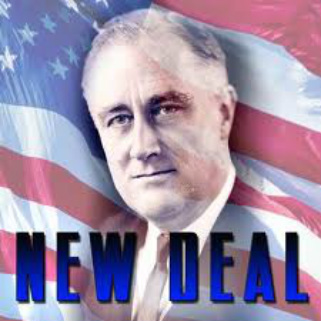
"Let us not be afraid to help each other—let us never forget that government is ourselves and not an alien power over us. The ultimate rulers of our democracy are not a President and Senators and Congressmen and Government officials but the voters of this country."
-Franklin D. Roosevelt
Thesis Statement
Roosevelt's New Deal was one of many examples of Keynesian economics, continuing into World War II and creating conditions necessary for the relative economic prosperity of the 1950s. Before the Great Depression, the amount of government intervention in the economy seen during the New Deal would be inconceivable. After the New Deal, rights were redefined, and the government's responsibility shifted toward promotion of general welfare and overseeing of the economy. In American political discourse, no longer would there be any question of if the government should intervene in an economic crisis but rather how much intervention should occur.
-Franklin D. Roosevelt
Thesis Statement
Roosevelt's New Deal was one of many examples of Keynesian economics, continuing into World War II and creating conditions necessary for the relative economic prosperity of the 1950s. Before the Great Depression, the amount of government intervention in the economy seen during the New Deal would be inconceivable. After the New Deal, rights were redefined, and the government's responsibility shifted toward promotion of general welfare and overseeing of the economy. In American political discourse, no longer would there be any question of if the government should intervene in an economic crisis but rather how much intervention should occur.